http://discovermagazine.com/2000/oct/featworld
20 Ways the World Could End
Are
we in danger of being erased from the universe? Here we look at the
factors that could doom humanity: natural disasters, human-triggered
cataclysms, willful self-destruction, and greater forces directed
against us.
We've had a good run of it. In the 500,000 years Homo sapiens has
roamed the land we've built cities, created complex languages, and sent
robotic scouts to other planets. It's difficult to imagine it all coming
to an end. Yet 99 percent of all species that ever lived have gone
extinct, including every one of our hominid ancestors. In 1983, British
cosmologist Brandon Carter framed the "
Doomsday argument,"
a statistical way to judge when we might join them. If humans were to
survive a long time and spread through the galaxy, then the total number
of people who will ever live might number in the trillions. By pure
odds, it's unlikely that we would be among the very first hundredth of a
percent of all those people. Or turn the argument around: How likely is
it that this generation will be the one unlucky one? Something like one
fifth of all the people who have ever lived are alive today. The odds
of being one of the people to witness doomsday are highest when there is
the largest number of witnesses around—so now is not such an improbable
time.
Human activity is severely disrupting almost all life on
the planet, which surely doesn't help matters. The current rate of
extinctions is, by some estimates, 10,000 times the average in the
fossil record. At present, we may worry about snail darters and red
squirrels in abstract terms. But the next statistic on the list could be
us.
Natural Disasters
1 Asteroid impact
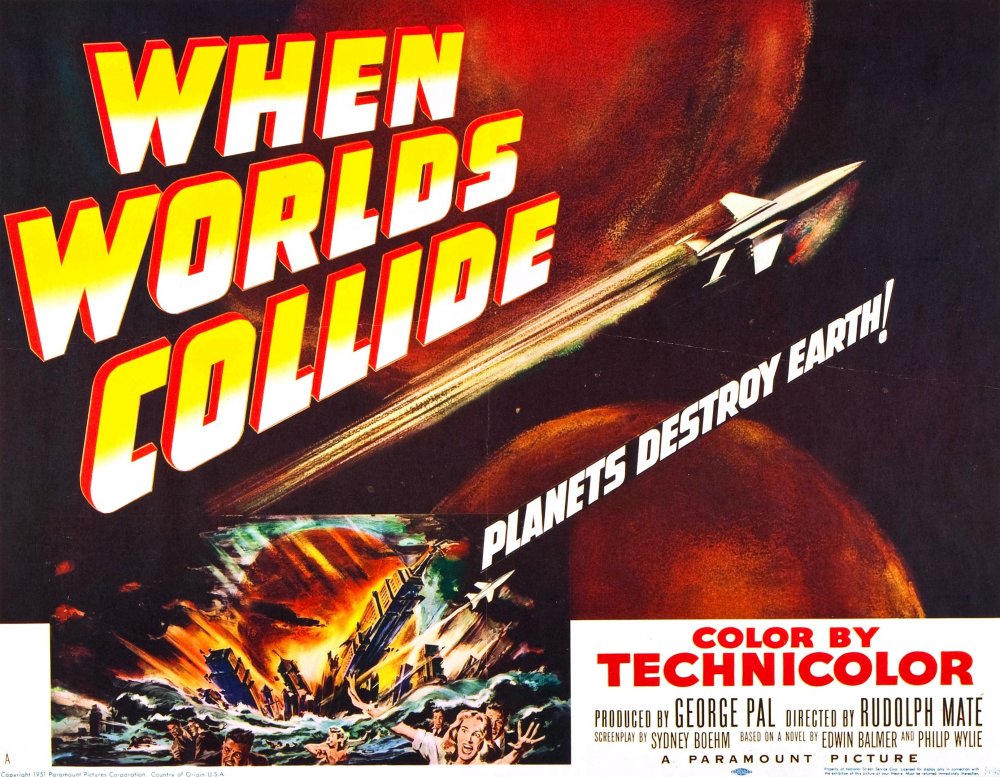
Once a disaster scenario gets the cheesy Hollywood treatment, it's hard
to take it seriously. But there is no question that a cosmic interloper
will hit Earth, and we won't have to wait millions of years for it to
happen. In 1908 a 200-foot-wide comet fragment slammed into the
atmosphere and exploded over the Tunguska region in Siberia, Russia,
with nearly 1,000 times the energy of the atomic bomb dropped on
Hiroshima. Astronomers estimate similar-sized events occur every one to
three centuries. Benny Peiser, an anthropologist-cum-pessimist at
Liverpool John Moores University in England, claims that impacts have
repeatedly disrupted human civilization. As an example, he says one
killed 10,000 people in the Chinese city of Chi'ing-yang in 1490. Many
scientists question his interpretations: Impacts are most likely to
occur over the ocean, and small ones that happen over land are most
likely to affect unpopulated areas. But with big asteroids, it doesn't
matter much where they land. Objects more than a half-mile wide—which
strike Earth every 250,000 years or so—would touch off firestorms
followed by global cooling from dust kicked up by the impact. Humans
would likely survive, but civilization might not. An asteroid five miles
wide would cause major extinctions, like the one that may have marked
the end of the age of dinosaurs. For a real chill, look to the Kuiper
belt, a zone just beyond Neptune that contains roughly 100,000 ice-balls
more than 50 miles in diameter. The Kuiper belt sends a steady rain of
small comets earthward. If one of the big ones headed right for us, that
would be it for pretty much all higher forms of life, even cockroaches.
2 Gamma-ray burst
If you could watch the sky with gamma-ray vision, you might think you
were being stalked by cosmic paparazzi. Once a day or so, you would see a
bright flash appear, briefly outshine everything else, then vanish.
These gamma-ray bursts, astrophysicists recently learned, originate in
distant galaxies and are unfathomably powerful—as much as 10 quadrillion
(a one followed by 16 zeros) times as energetic as the sun. The bursts
probably result from the merging of two collapsed stars. Before the
cataclysmal event, such a double star might be almost completely
undetectable, so we'd likely have no advance notice if one is lurking
nearby. Once the burst begins, however, there would be no missing its
fury. At a distance of 1,000 light-years—farther than most of the stars
you can see on a clear night—it would appear about as bright as the sun.
Earth's atmosphere would initially protect us from most of the burst's
deadly X rays and gamma rays, but at a cost. The potent radiation would
cook the atmosphere, creating nitrogen oxides that would destroy the
ozone layer. Without the ozone layer, ultraviolet rays from the sun
would reach the surface at nearly full force, causing skin cancer and,
more seriously, killing off the tiny photosynthetic plankton in the
ocean that provide oxygen to the atmosphere and bolster the bottom of
the food chain. All the gamma-ray bursts observed so far have been
extremely distant, which implies the events are rare. Scientists
understand so little about these explosions, however, that it's
difficult to estimate the likelihood of one detonating in our galactic
neighborhood.
3 Collapse of the vacuum In the book
Cat's Cradle,
Kurt Vonnegut popularized the idea of "ice-nine," a form of water that
is far more stable than the ordinary kind, so it is solid at room
temperature. Unleash a bit of it, and suddenly all water on Earth
transforms to ice-nine and freezes solid. Ice-nine was a satirical
invention, but an abrupt, disastrous phase transition is a possibility.
Very early in the history of the universe, according to a leading
cosmological model, empty space was full of energy. This state of
affairs, called a false vacuum, was highly precarious. A new, more
stable kind of vacuum appeared and, like ice-nine, it quickly took over.
This transition unleashed a tremendous amount of energy and caused a
brief runaway expansion of the cosmos. It is possible that another, even
more stable kind of vacuum exists, however. As the universe expands and
cools, tiny bubbles of this new kind of vacuum might appear and spread
at nearly the speed of light. The laws of physics would change in their
wake, and a blast of energy would dash everything to bits. "It makes for
a beautiful story, but it's not very likely," says Piet Hut of the
Institute for Advanced Studies in Princeton, New Jersey. He says he
worries more about threats that scientists are more certain of—such as
rogue black holes.
4 Rogue black holes
Our galaxy is full of black holes, collapsed stellar corpses just a
dozen miles wide. How full? Tough question. After all, they're called
black holes for a reason. Their gravity is so strong they swallow
everything, even the light that might betray their presence. David
Bennett of Notre Dame University in Indiana managed to spot two black
holes recently by the way they distorted and amplified the light of
ordinary, more distant stars. Based on such observations, and even more
on theoretical arguments, researchers guesstimate there are about 10
million black holes in the Milky Way. These objects orbit just like
other stars, meaning that it is not terribly likely that one is headed
our way. But if a normal star were moving toward us, we'd know it. With a
black hole there is little warning. A few decades before a close
encounter, at most, astronomers would observe a strange perturbation in
the orbits of the outer planets. As the effect grew larger, it would be
possible to make increasingly precise estimates of the location and mass
of the interloper. The black hole wouldn't have to come all that close
to Earth to bring ruin; just passing through the solar system would
distort all of the planets' orbits. Earth might get drawn into an
elliptical path that would cause extreme climate swings, or it might be
ejected from the solar system and go hurtling to a frigid fate in deep
space.
5 Giant solar flares
Solar flares—more properly known as coronal mass ejections—are enormous
magnetic outbursts on the sun that bombard Earth with a torrent of
high-speed subatomic particles. Earth's atmosphere and magnetic field
negate the potentially lethal effects of ordinary flares. But while
looking through old astronomical records, Bradley Schaefer of Yale
University found evidence that some perfectly normal-looking, sunlike
stars can brighten briefly by up to a factor of 20. Schaefer believes
these stellar flickers are caused by superflares, millions of times more
powerful than their common cousins. Within a few hours, a superflare on
the sun could fry Earth and begin disintegrating the ozone layer (see
#2). Although there is persuasive evidence that our sun doesn't engage
in such excess, scientists don't know why superflares happen at all, or
whether our sun could exhibit milder but still disruptive behavior. And
while too much solar activity could be deadly, too little of it is
problematic as well. Sallie Baliunas at the Harvard-Smithsonian Center
for Astrophysics says many solar-type stars pass through extended
quiescent periods, during which they become nearly 1 percent dimmer.
That might not sound like much, but a similar downturn in the sun could
send us into another ice age. Baliunas cites evidence that decreased
solar activity contributed to 17 of the 19 major cold episodes on Earth
in the last 10,000 years.
6 Reversal of Earth's magnetic field
Every few hundred thousand years Earth's magnetic field dwindles almost
to nothing for perhaps a century, then gradually reappears with the
north and south poles flipped. The last such reversal was 780,000 years
ago, so we may be overdue. Worse, the strength of our magnetic field has
decreased about 5 percent in the past century. Why worry in an age when
GPS has made compasses obsolete? Well, the magnetic field deflects
particle storms and cosmic rays from the sun, as well as even more
energetic subatomic particles from deep space. Without magnetic
protection, these particles would strike Earth's atmosphere, eroding the
already beleaguered ozone layer (see #5). Also, many creatures navigate
by magnetic reckoning. A magnetic reversal might cause serious
ecological mischief. One big caveat: "There are no identifiable fossil
effects from previous flips," says Sten Odenwald of the NASA Goddard
Space Flight Center. "This is most curious." Still, a disaster that
kills a quarter of the population, like the Black Plague in Europe,
would hardly register as a blip in fossil records.
7 Flood-basalt volcanism
In 1783, the Laki volcano in Iceland erupted, spitting out three cubic
miles of lava. Floods, ash, and fumes wiped out 9,000 people and 80
percent of the livestock. The ensuing starvation killed a quarter of
Iceland's population. Atmospheric dust caused winter temperatures to
plunge by 9 degrees in the newly independent United States. And that was
just a baby's burp compared with what the Earth can do. Sixty-five
million years ago, a plume of hot rock from the mantle burst through the
crust in what is now India. Eruptions raged century after century,
ultimately unleashing a quarter-million cubic miles of lava—the Laki
eruption 100,000 times over. Some scientists still blame the Indian
outburst, not an asteroid, for the death of the dinosaurs. An earlier,
even larger event in Siberia occurred just about the time of the
Permian-Triassic extinction, the most thorough extermination known to
paleontology. At that time 95 percent of all species were wiped out.
Sulfurous
volcanic gases produce acid rains. Chlorine-bearing compounds present
yet another threat to the fragile ozone layer—a noxious brew all around.
While they are causing short-term destruction, volcanoes also release
carbon dioxide that yields long-term greenhouse-effect warming.The last
big pulse of flood-basalt volcanism built the Columbia River plateau
about 17 million years ago. We're ripe for another.
8 Global epidemics
If Earth doesn't do us in, our fellow organisms might be up to the
task. Germs and people have always coexisted, but occasionally the
balance gets out of whack. The Black Plague killed one European in four
during the 14th century; influenza took at least 20 million lives
between 1918 and 1919; the AIDS epidemic has produced a similar death
toll and is still going strong. From 1980 to 1992, reports the Centers
for Disease Control and Prevention, mortality from infectious disease in
the United States rose 58 percent. Old diseases such as cholera and
measles have developed new resistance to antibiotics. Intensive
agriculture and land development is bringing humans closer to animal
pathogens. International travel means diseases can spread faster than
ever. Michael Osterholm, an infectious disease expert who recently left
the Minnesota Department of Health, described the situation as "like
trying to swim against the current of a raging river." The grimmest
possibility would be the emergence of a strain that spreads so fast we
are caught off guard or that resists all chemical means of control,
perhaps as a result of our stirring of the ecological pot. About 12,000
years ago, a sudden wave of mammal extinctions swept through the
Americas. Ross MacPhee of the American Museum of Natural History argues
the culprit was extremely virulent disease, which humans helped
transport as they migrated into the New World.
Human-Triggered Disasters
9 Global warming
The Earth is getting warmer, and scientists mostly agree that humans
bear some blame. It's easy to see how global warming could flood cities
and ruin harvests. More recently, researchers like Paul Epstein of
Harvard Medical School have raised the alarm that a balmier planet could
also assist the spread of infectious disease by providing a more
suitable climate for parasites and spreading the range of tropical
pathogens (see #8). That could include crop diseases which, combined
with substantial climate shifts, might cause famine. Effects could be
even more dramatic. At present, atmospheric gases trap enough heat close
to the surface to keep things comfortable. Increase the global
temperature a bit, however, and there could be a bad feedback effect,
with water evaporating faster, freeing water vapor (a potent greenhouse
gas), which traps more heat, which drives carbon dioxide from the rocks,
which drives temperatures still higher. Earth could end up much like
Venus, where the high on a typical day is 900 degrees Fahrenheit. It
would probably take a lot of warming to initiate such a runaway
greenhouse effect, but scientists have no clue where exactly the tipping
point lies.
10 Ecosystem collapse
Images of slaughtered elephants and burning rain forests capture
people's attention, but the big problem—the overall loss of
biodiversity—is a lot less visible and a lot more serious. Billions of
years of evolution have produced a world in which every organism's
welfare is intertwined with that of countless other species. A recent
study of Isle Royale National Park in Lake Superior offers an example.
Snowy winters encourage wolves to hunt in larger packs, so they kill
more moose. The decline in moose population allows more balsam fir
saplings to live. The fir trees pull carbon dioxide out of the
atmosphere, which in turn influences the climate. It's all connected. To
meet the demands of the growing population, we are clearing land for
housing and agriculture, replacing diverse wild plants with just a few
varieties of crops, transporting plants and animals, and introducing new
chemicals into the environment. At least 30,000 species vanish every
year from human activity, which means we are living in the midst of one
of the greatest mass extinctions in Earth's history. Stephen Kellert, a
social ecologist at Yale University, sees a number of ways people might
upset the delicate checks and balances in the global ecology. New
patterns of disease might emerge (see #8), he says, or pollinating
insects might become extinct, leading to widespread crop failure. Or as
with the wolves of Isle Royale, the consequences might be something we'd
never think of, until it's too late.
11 Biotech disaster
While we are extinguishing natural species, we're also creating new
ones through genetic engineering. Genetically modified crops can be
hardier, tastier, and more nutritious. Engineered microbes might ease
our health problems. And gene therapy offers an elusive promise of
fixing fundamental defects in our DNA. Then there are the possible
downsides. Although there is no evidence indicating genetically modified
foods are unsafe, there are signs that the genes from modified plants
can leak out and find their way into other species. Engineered crops
might also foster insecticide resistance. Longtime skeptics like Jeremy
Rifkin worry that the resulting superweeds and superpests could further
destabilize the stressed global ecosystem (see #9). Altered microbes
might prove to be unexpectedly difficult to control. Scariest of all is
the possibility of the deliberate misuse of biotechnology. A terrorist
group or rogue nation might decide that anthrax isn't nasty enough and
then try to put together, say, an airborne version of the Ebola virus.
Now there's a showstopper.
12 Particle accelerator mishap
Theodore Kaczynski, better known as the Unabomber, raved that a
particle accelerator experiment could set off a chain reaction that
would destroy the world. Surprisingly, many sober-minded physicists have
had the same thought. Normally their anxieties come up during private
meetings, amidst much scribbling on the backs of used envelopes.
Recently the question went public when London's
Sunday Times
reported that the Relativistic Heavy Ion Collider (RHIC) on Long Island,
New York, might create a subatomic black hole that would slowly nibble
away our planet. Alternately, it might create exotic bits of altered
matter, called strangelets, that would obliterate whatever ordinary
matter they met. To assuage RHIC's jittery neighbors, the lab's director
convened a panel that rejected both scenarios as pretty much
impossible. Just for good measure, the panel also dismissed the
possibility that RHIC would trigger a phase transition in the cosmic
vacuum energy (see #3). These kinds of reassurances follow the tradition
of the 1942 "LA-602" report, a once-classified document that explained
why the detonation of the first atomic bomb almost surely would not set
the atmosphere on fire. The RHIC physicists did not, however, reject the
fundamental possibility of the disasters. They argued that their
machine isn't nearly powerful enough to make a black hole or destabilize
the vacuum. Oh, well. We can always build a bigger accelerator.
13 Nanotechnology disaster
Before you've even gotten the keyboard dirty, your home computer is
obsolete, largely because of incredibly rapid progress in miniaturizing
circuits on silicon chips. Engineers are using the same technology to
build crude, atomic-scale machines, inventing a new field as they go
called nanotechnology. Within a few decades, maybe sooner, it should be
possible to build microscopic robots that can assemble and replicate
themselves. They might perform surgery from inside a patient, build any
desired product from simple raw materials, or explore other worlds. All
well and good if the technology works as intended. Then again, consider
what K. Eric Drexler of the Foresight Institute calls the "grey goo
problem" in his book
Engines of Creation, a cult favorite among
the nanotech set. After an industrial accident, he writes,
bacteria-sized machines, "could spread like blowing pollen, replicate
swiftly, and reduce the biosphere to dust in a matter of days." And
Drexler is actually a strong proponent of the technology. More
pessimistic souls, such as Bill Joy, a cofounder of Sun Microsystems,
envision nano-machines as the perfect precision military or terrorist
tools.
14 Environmental toxins
From Donora, Pennsylvania, to Bhopal, India, modern history abounds with
frightening examples of the dangers of industrial pollutants. But the
poisoning continues. In major cities around the world, the air is thick
with diesel particulates, which the National Institutes of Health now
considers a carcinogen. Heavy metals from industrial smokestacks circle
the globe, even settling in the pristine snows of Antarctica. Intensive
use of pesticides in farming guarantees runoff into rivers and lakes. In
high doses, dioxins can disrupt fetal development and impair
reproductive function—and dioxins are everywhere. Your house may contain
polyvinyl chloride pipes, wallpaper, and siding, which belch dioxins if
they catch fire or are incinerated. There are also the unknown risks to
think about. Every year NIH adds to its list of cancer-causing
substances—the number is up to 218. Theo Colburn of the World Wildlife
Fund argues that dioxins and other, similar chlorine-bearing compounds
mimic the effects of human hormones well enough that they could
seriously reduce fertility. Many other scientists dispute her evidence,
but if she's right, our chemical garbage could ultimately threaten our
survival.
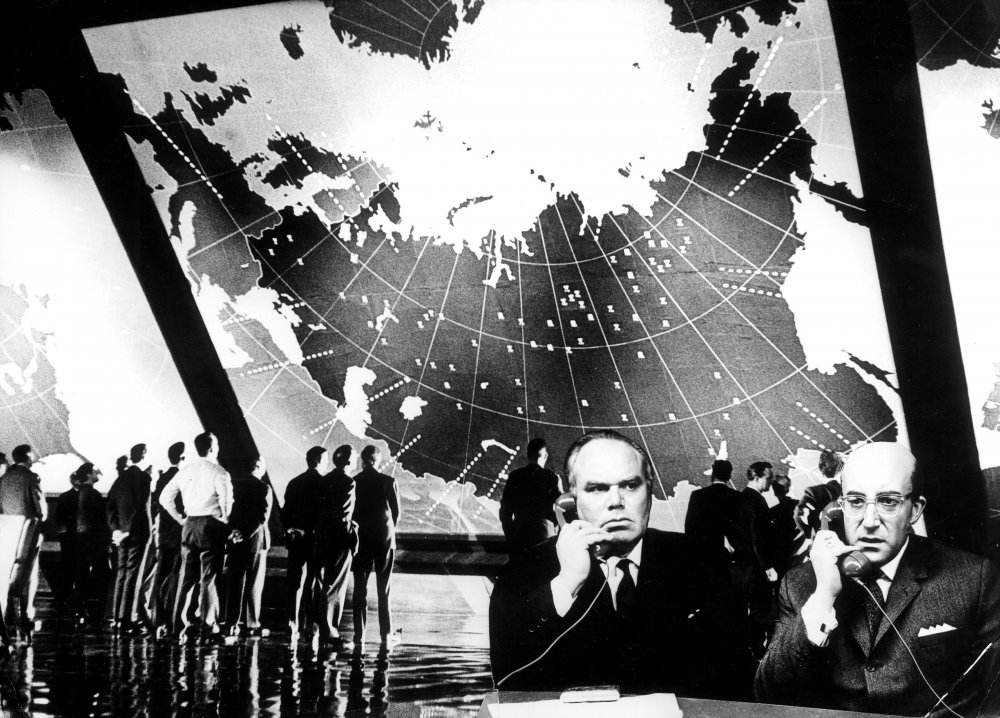
15 Global war Together, the United
States and Russia still have almost 19,000 active nuclear warheads.
Nuclear war seems unlikely today, but a dozen years ago the demise of
the Soviet Union also seemed rather unlikely. Political situations
evolve; the bombs remain deadly. There is also the possibility of an
accidental nuclear exchange. And a ballistic missile defense system,
given current technology, will catch only a handful of stray
missiles—assuming it works at all. Other types of weaponry could have
global effects as well. Japan began experimenting with biological
weapons after World War I, and both the United States and the Soviet
Union experimented with killer germs during the cold war. Compared with
atomic bombs, bioweapons are cheap, simple to produce, and easy to
conceal. They are also hard to control, although that unpredictability
could appeal to a terrorist organization. John Leslie, a philosopher at
the University of Guelph in Ontario, points out that genetic engineering
might permit the creation of "ethnic" biological weapons that are
tailored to attack primarily one ethnic group (see #11).
16 Robots take over
People create smart robots, which turn against us and take over the
world. Yawn. We've seen this in movies, TV, and comic books for decades.
After all these years, look around and still—no smart robots. Yet Hans
Moravec, one of the founders of the robotics department of Carnegie
Mellon University, remains a believer. By 2040, he predicts, machines
will match human intelligence, and perhaps human consciousness. Then
they'll get even better. He envisions an eventual symbiotic relationship
between human and machine, with the two merging into "postbiologicals"
capable of vastly expanding their intellectual power. Marvin Minsky, an
artificial-intelligence expert at MIT, foresees a similar future: People
will download their brains into computer-enhanced mechanical surrogates
and log into nearly boundless files of information and experience.
Whether this counts as the end of humanity or the next stage in
evolution depends on your point of view. Minsky's vision might sound
vaguely familiar. After the first virtual-reality machines hit the
marketplace around 1989, feverish journalists hailed them as electronic
LSD, trippy illusion machines that might entice the user in and then
never let him out. Sociologists fretted that our culture, maybe even our
species, would whither away. When the actual experience of virtual
reality turned out to be more like trying to play Pac-Man with a bowling
ball taped to your head, the talk died down. To his credit, Minsky
recognizes that the merger of human and machine lies quite a few years
away.
17 Mass insanity While
physical health has improved in most parts of the world over the past
century, mental health is getting worse. The World Health Organization
estimates that 500 million people around the world suffer from a
psychological disorder. By 2020, depression will likely be the second
leading cause of death and lost productivity, right behind
cardiovascular disease. Increasing human life spans may actually
intensify the problem, because people have more years to experience the
loneliness and infirmity of old age. Americans over 65 already are
disproportionately likely to commit suicide. Gregory Stock, a
biophysicist at the University of California at Los Angeles, believes
medical science will soon allow people to live to be 200 or older. If
such an extended life span becomes common, it will pose unfathomable
social and psychological challenges. Perhaps 200 years of accumulated
sensations will overload the human brain, leading to a new kind of
insanity or fostering the spread of doomsday cults, determined to
reclaim life's endpoint. Perhaps the current trends of depression and
suicide among the elderly will continue. One possible solution—promoting
a certain kind of mental well-being with psychoactive drugs such as
Prozac—heads into uncharted waters. Researchers have no good data on the
long-term effects of taking these medicines.
18 Alien invasion At the SETI
Institute in Mountain View, California, a cadre of dedicated scientists
sifts through radio static in search of a telltale signal from an alien
civilization. So far, nothing. Now suppose the long-sought message
arrives. Not only do the aliens exist, they are about to stop by for a
visit. And then . . . any science-fiction devotee can tell you what
could go wrong. But the history of human exploration and exploitation
suggests the most likely danger is not direct conflict. Aliens might
want resources from our solar system (Earth's oceans, perhaps, full of
hydrogen for refilling a fusion-powered spacecraft) and swat us aside if
we get in the way, as we might dismiss mosquitoes or beetles stirred up
by the logging of a rain forest. Aliens might unwittingly import pests
with a taste for human flesh, much as Dutch colonists reaching Mauritius
brought cats, rats, and pigs that quickly did away with the dodo. Or
aliens might accidentally upset our planet or solar system while
carrying out some grandiose interstellar construction project. The late
physicist Gerard O'Neill speculated that contact with extraterrestrial
visitors could also be socially disastrous. "Advanced western
civilization has had a destructive effect on all primitive civilizations
it has come in contact with, even in those cases where every attempt
was made to protect and guard the primitive civilization," he said in a
1979 interview. "I don't see any reason why the same thing would not
happen to us."
19 Divine intervention
Judaism has the Book of Daniel; Christianity has the Book of
Revelation; Islam has the coming of the Mahdi; Zoroastrianism has the
countdown to the arrival of the third son of Zoroaster. The stories and
their interpretations vary widely, but the underlying concept is
similar: God intervenes in the world, bringing history to an end and
ushering in a new moral order. Apocalyptic thinking runs at least back
to Egyptian mythology and right up to Heaven's Gate and Y2K mania. More
worrisome, to the nonbelievers at least, are the doomsday cults that
prefer to take holy retribution into their own hands. In 1995, members
of the Aum Shinri Kyo sect unleashed sarin nerve gas in a Tokyo subway
station, killing 12 people and injuring more than 5,000. Had things gone
as intended, the death toll would have been hundreds of times greater. A
more determined group armed with a more lethal weapon—nuclear,
biological, nanotechnological even—could have done far more damage.
20 Someone wakes up and realizes it was all a dream
Are we living a shadow existence that only fools us into thinking it is
real? This age-old philosophical question still reverberates through
cultural thought, from the writings of William S. Burrows to the
cinematic mind games of
The Matrix. Hut of the Institute of
Advanced Studies sees an analogy to the danger of the collapse of the
vacuum. Just as our empty space might not be the true, most stable form
of the vacuum, what we call reality might not be the true, most stable
form of existence. In the fourth century B.C., Taoist philosopher Chuang
Tzu framed the question in more poetic terms. He described a vivid
dream. In it, he was a butterfly who had no awareness of his existence
as a person. When he awoke, he asked: "Was I before Chuang Tzu who
dreamt about being a butterfly, or am I now a butterfly who dreams about
being Chuang Tzu?"